
It’s Whale Watching Season!!
Whale Watching Season
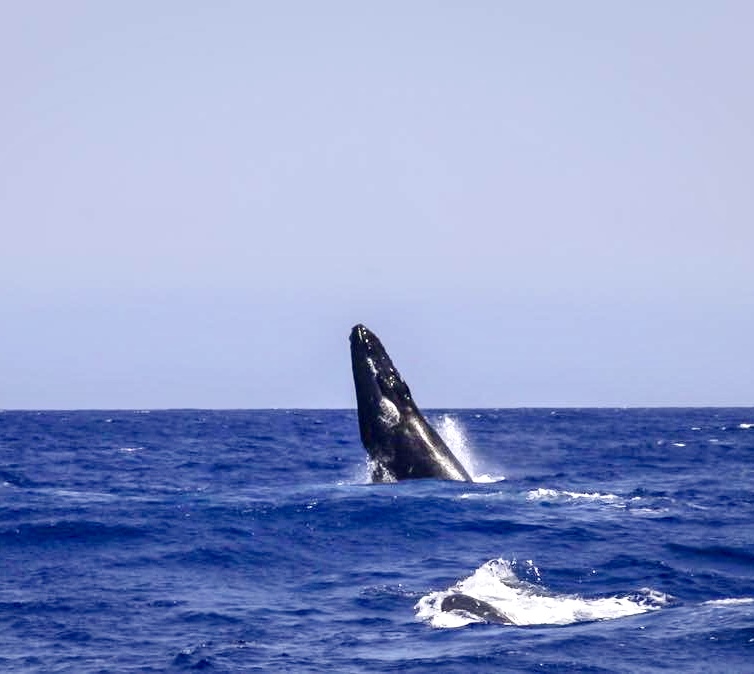
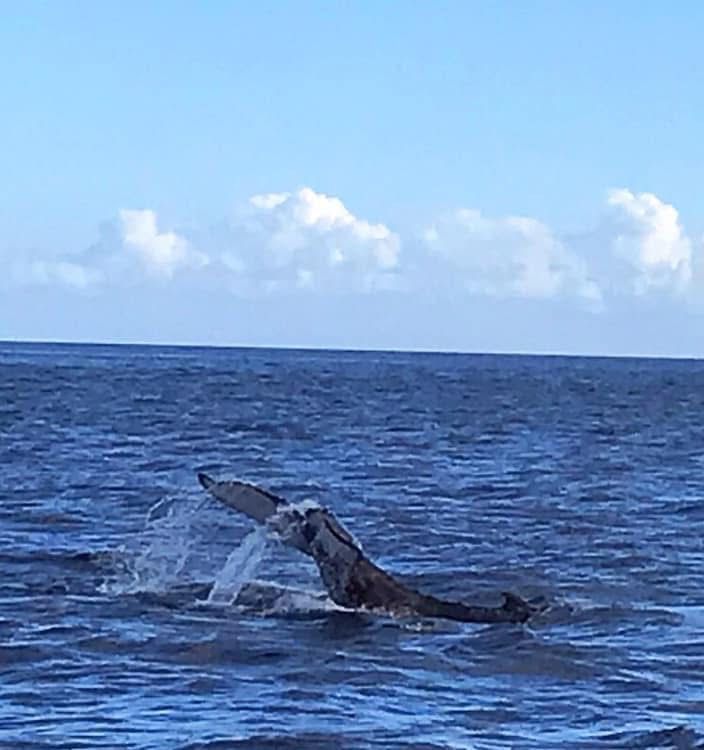
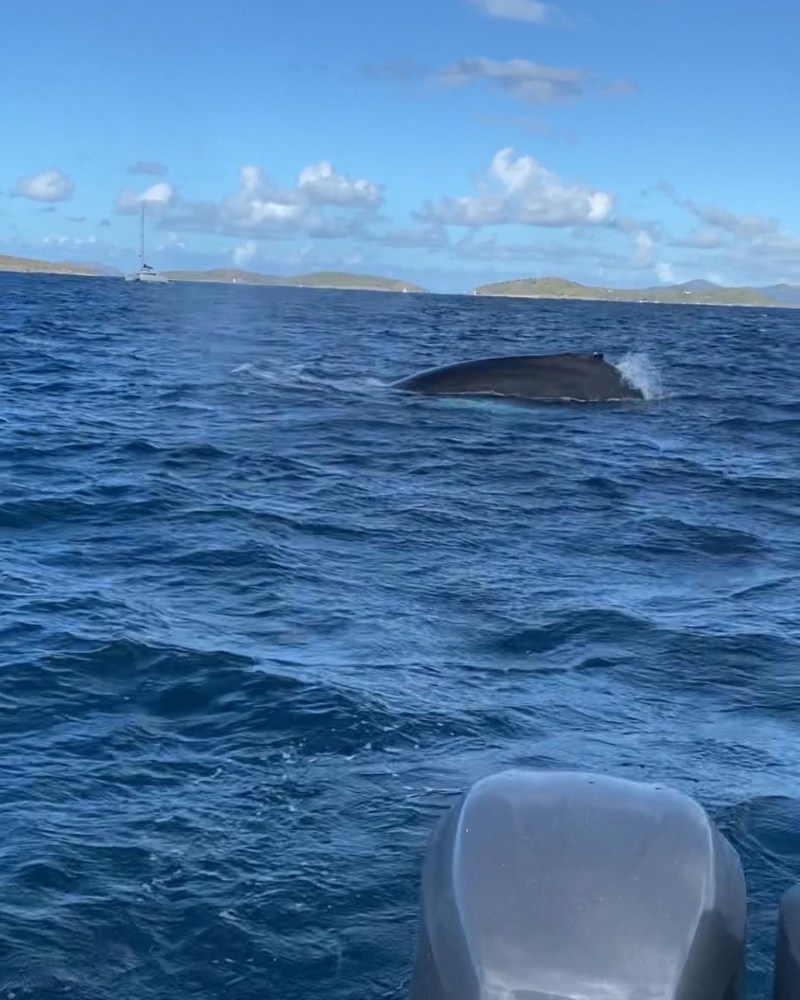
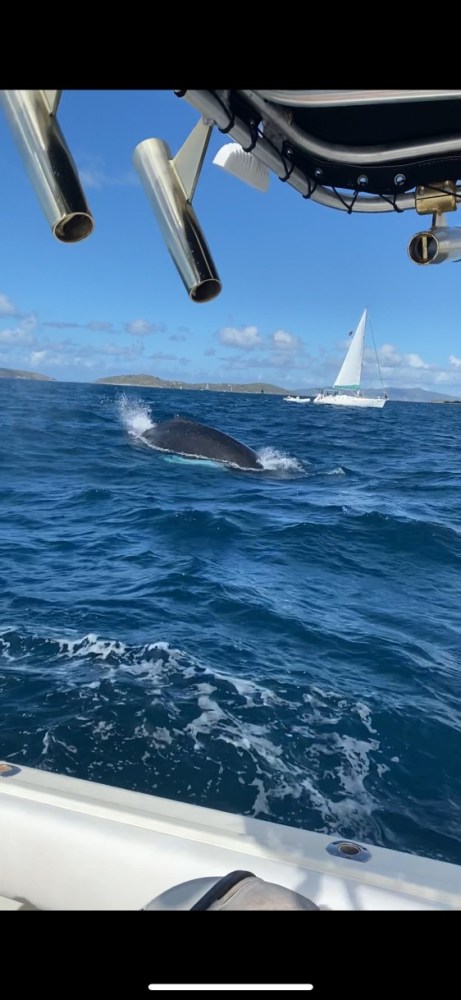
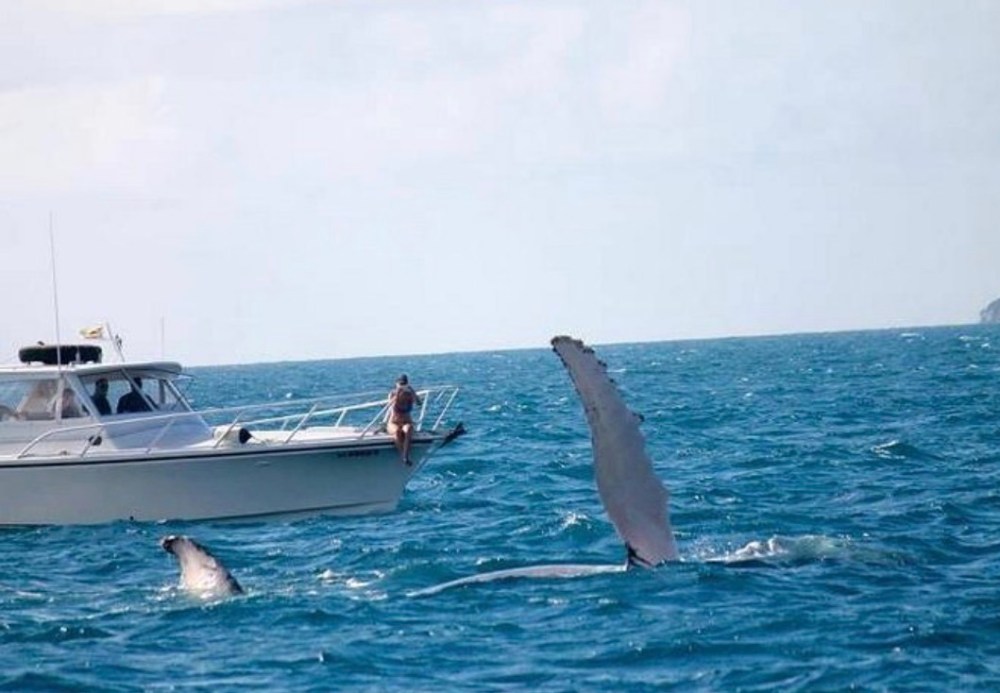
Ahoy! And welcome to “whale watching season” – one of the most thrilling encounters imaginable. Although humpback whale sightings can occur as early as December and as late as April, the best chance for viewing is February through March. Over the past few weeks our guests have been enjoying humpback whale sightings. Viewing the whales breaching and slapping their tails on film is quite spectacular. If you’ve never come close to one of these massive creatures doing its aquatic acrobatics, you’re missing out on an awe-inspiring event. This blog is full of pictures taken by our crew members and guests.
The Basics
Although other species of whales can be found in the deep, offshore waters around the U.S. and British Virgin Islands, it’s the humpback whale that garners most of the attention. Massive in size, these majestic animals can grow to some 50 feet long and weigh as much as 40 tons – definitely one of the largest animals on the planet!. Because of their size, breaching (when a whale propels itself out of the water and crashes with a big splash) and tail slapping create quite the waterworks for anyone nearby. This massive display of strength, while highly sought after by tourists, seems to also be important for the whale’s health. Some theorize that breaching may be a form of communication, a way to shed unhealthy parasites, or even a fun, exuberant activity that brings them joy.
Social in nature, humpback whales travel in groups as they make their annual migration to the Virgin Islands. They also are known for their singing – a pattern of moans, groans, whistles, and pulses – which, if heard, can be quite fascinating. Both male and female humpbacks make a variety of sounds, but only the males produce those elaborate tunes we call “songs.” What’s truly fascinating is that humpbacks have no vocal chords, so their sounds are created by forcing air through their nasal cavities.
Screenshot
Other interesting facts:
- The humpback whale gets its name from the shape its back makes before diving below the surface.
- The edge of a whale’s tail, known as a ‘fluke’, is unique to each humpback, much like a fingerprint.
- Humpbacks have two blow holes on top of their heads.
- When multiple whales release air in unison through their blow holes, it creates a net of air that traps large quantities of fish at one time.
- Whales are important for ecological reasons as they help the marine ecosystem by redistributing nutrients through their waste which contributes to better ocean health.
- To ensure their safety, there are strict rules and guidelines about observing whales in Caribbean waters. According to the Marine Mammal Protection Act and other laws, spectators are not to disturb or infringe upon the whales’ natural habitat. Viewing is to take place at a respectful distance.
Screenshot
The Big Migration
Humpback whales are migratory beasts that travel some 5,000 miles every year from cold, high-latitude waters where they feed on numerous krill, mackerel, herring, anchovies, and sardines to build up fat reserves before traveling to warmer Caribbean waters for breeding, calving, and nursing their young. Most of the whales seen in the Virgin Islands come from the North Atlantic.
Although the exact reasons for migration aren’t fully known, scientists presume these factors have something to do with their yearly migration:
- Diet: In the winter months, the food supply for calves is more abundant in the Caribbean waters.
- Breeding: Giving birth in warmer waters seems to be a beneficial pattern for humpback whales as warm water helps to regulate a newborn’s body temperature.
- Conserving Energy: Both giving birth and nursing require precious energy, so the warm waters offer the opportunity for adult whales to exist without as much energy expended.
- Safety: It’s easier for humpbacks to protect themselves and their calves in shallower water. Calves can then learn and explore without the dangers of predators found in deep, open waters.
Whale Watching Suggestions
If you’re curious or enthralled with the idea of sighting a humpback whale breaching in the Virgin Islands’ aqua waters, here are a few suggestions to help you fulfill that goal:
#1. Book a boat day – The best way to spot breaching whales is out on the open waters. Stormy Pirates can help, so give us a call and we’ll take you to the best locations where your chances improve of catching sight of those magnificent creatures.
#2. Be prepared – This translates to bringing binoculars for better viewing, having your camera ready, and packing a lot of patience. Whales surface on their own time schedule and can’t be rushed. And, there’s never a guarantee that they’ll be sighted. But remember – there are plenty of other amazing things to see in the Virgin Islands.
#3. Read up on other whales you might see – Sperm whales, minke whales and pilot whales all inhabit the Virgin Islands, so study up and know what they look like. The entire species is quite unique and thrilling to see.
#4. Hope for a double feature – Dolphins often swim with the whales so maybe you’ll get the bonus experience of witnessing our local dolphins spinning and frolicking next to your boat.
Best Bets
There isn’t a specific time schedule or map for whale sightings, but several locations during prime season seem to attract the most whales. On St. Thomas, try Thatch Cay and Hull Bay. If you’re trying to spot them from the shoreline, try picturesque Magens Bay, the beautiful, clear waters of Coki Beach or the waterfront of Charlotte Amalie Harbor where whales have been known to pass by. On St. John, try off of the South Shore or in the channel between St. John and Tortola. Recently, whales were spotted off of Jost Van Dyke and between Anegada and Marina Cay. One lucky riser saw them in January in front of Sapphire Beach. It’s prime whale sighting season, so keep on the alert and let us know what you find!
End Notes: If you’ve got a pirate’s sense of adventure and whale watching is something you’ve always dreamed of doing, now is the time to reach out to us at Stormy Pirates. Book a boat day with us, and our experienced and knowledgeable crew will make every effort for you to experience an up-close-and- personal viewing event. We promise to put the gang plank down and escort you in style. The memories you make will last a lifetime!